Glazunov Ilya Sergeyevich
The Russian North
Year
1968
Material
Oil on canvas
Dimensions
100х76
Category
Painting
Enquire About Price
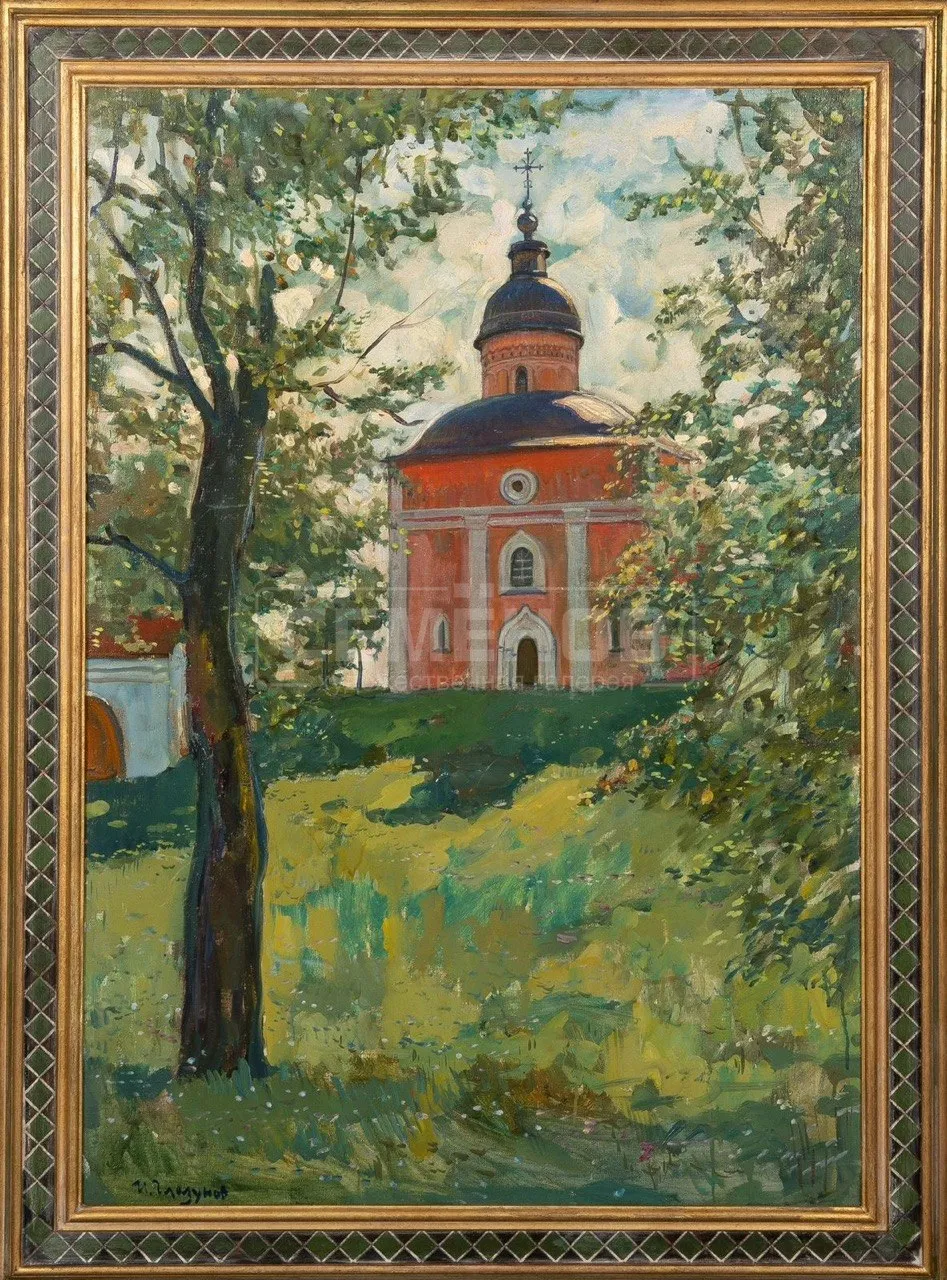
The Russian North
Glazunov Ilya Sergeyevich
✓
Enquiry Received
We will contact you within 24 hours.
In 1974, the work was exhibited in Germany at the exhibition of 45 Soviet artists "Soviet Realism".
Artist
Glazunov Ilya Sergeyevich
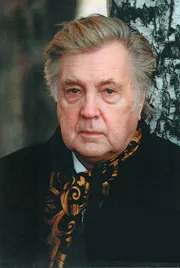
1930 — 2017
Ilya Sergeyevich Glazunov was a Soviet and Russian painter associated with the Pochvennichestvo movement, a scenographer, educator, and People's Artist of the USSR. He was a full cavalier of the Order For Merit to the Fatherland. His accolades include the Order of the Million Elephants and the White Parasol (Laos), the Jawaharlal Nehru Award (India), the Order of the Wing of St. Michael (Portugal), and the UNESCO Gold Medal for exceptional contribution to world culture and civilization, among other distinctions. He was the founder of the Rodina patriotic club (early 1960s) and one of the organizers of the All-Russian Society for the Protection of Historical and Cultural Monuments. Glazunov studied at the Leningrad Secondary Art School and the Repin Institute of Painting, Sculpture and Architecture (LIZhSA) in the studio of Boris Ioganson. In early February 1957, the artist's inaugural exhibition was held at the Central House of Art Workers in Moscow. From 1978, he directed the portrait studio at the Surikov Moscow State Academic Art Institute. In 1981, he organized the All-Union Museum of Decorative, Applied and Folk Art in Moscow and served as its director. In 1987, Glazunov founded the Russian Academy of Painting, Sculpture and Architecture (RAZhViZ), serving as its rector until his passing. The artist produced illustrations for the works of Mikhail Lermontov, Pavel Melnikov-Pechersky, Nikolai Leskov, Alexander Blok, Ivan Goncharov, Aleksey Tolstoy, and Aleksandr Kuprin. Glazunov executed a series of portraits of Soviet and international political and public figures, writers, and luminaries of science and the arts. He also designed sets and costumes for productions including Nikolai Rimsky-Korsakov's 'The Legend of the Invisible City of Kitezh and the Maiden Fevroniya' at the Bolshoi Theatre, Alexander Borodin's 'Prince Igor' and Pyotr Tchaikovsky's 'The Queen of Spades' at the Berlin State Opera, and Aram Khachaturian's ballet 'Masquerade' at the Odessa Theatre. In 1980, commissioned by UNESCO, Glazunov created the mural 'The Contribution of the Peoples of the Soviet Union to World Culture and Civilization' for the organization's headquarters.